How Do You Know You’ve Chosen the Right Platform for Your Business in 2026?
TL;DR: The right social media platform can shorten your sales cycle. The wrong one can waste months of your time and energy. This 2026 guide breaks down LinkedIn, Instagram, TikTok, Facebook, YouTube, and X so you can choose based on audience behavior, B2B vs B2C goals, posting frequency, content shelf life, and real return on effort.
How Do You Know You’ve Chosen the Right Platform for Your Business in 2026?
It’s scary right?
There’s so many social platforms out there, a million different opinions, and it’s hard to keep up with all the different platform changes.
When people find out we do social media and copywriting services, it’s one of the most common questions we get.
“Which social media platforms should I use for my business?”
But I get it. It makes them feel like they are missing out on something or that they’re behind if they’re not on every platform.
But really, it depends so much on your capacity, budget, and goal.
We use socials differently for personal reasons than we do for business reasons.
You might use Facebook to catch up with friends, old college buddies, and share all your kids’ pictures with grandma and grandpa. But then you might head over to Instagram or Snapchat to share funny memes, YouTube to watch tutorials, or Twitter for real time topics and trending news.
But business is different. How do you translate how you use social media into how your business should use it?
Instagram, TikTok, LinkedIn, Facebook, YouTube, X. Every platform promises something different. But you don’t need to be everywhere.
If you know where your audience already spends time and the environment that supports how your business works, you will see a return on your investment.
But you absolutely need to consider your capacity, your goals, and whether you’re doing this yourself or investing in help before you make your final decision. If you spread yourself too thin, it won’t matter which platform you are on.
How do you choose the right social media platform?
Choosing the Right Social Media Platform in 2026 isn’t cut and dry. Let’s break it down:
The best platform depends on audience behavior, not trends. You don’t need to be everywhere. You need to be where your ideal clients already spend time and make decisions
B2B and higher-ticket businesses perform better on trust-based platforms. LinkedIn and X support longer decision cycles and relationship building.
B2C, ecommerce, and product-based businesses benefit from visual discovery platforms. Instagram, TikTok, Facebook, and YouTube support faster decisions.
Posting frequency matters less than content shelf life and return on effort. One strong LinkedIn post can work for weeks. YouTube content can work for years.
Most businesses struggle because they spread themselves too thin. It’s rarely about choosing the wrong platform.
Organic social media builds trust, not instant sales. ROI shows up when visibility turns into conversations, and conversations turn into opportunities.
How Different Social Media Platforms Actually Work For Business
One of the biggest misconceptions about social media is assuming every platform works the same way.
People use platforms very differently depending on context. You might scroll Instagram to unwind at night, use Facebook to see what is happening locally, watch YouTube to learn something specific, and open LinkedIn when you are in a professional mindset.
That difference matters when you are deciding where your business should show up and how you should show up there.
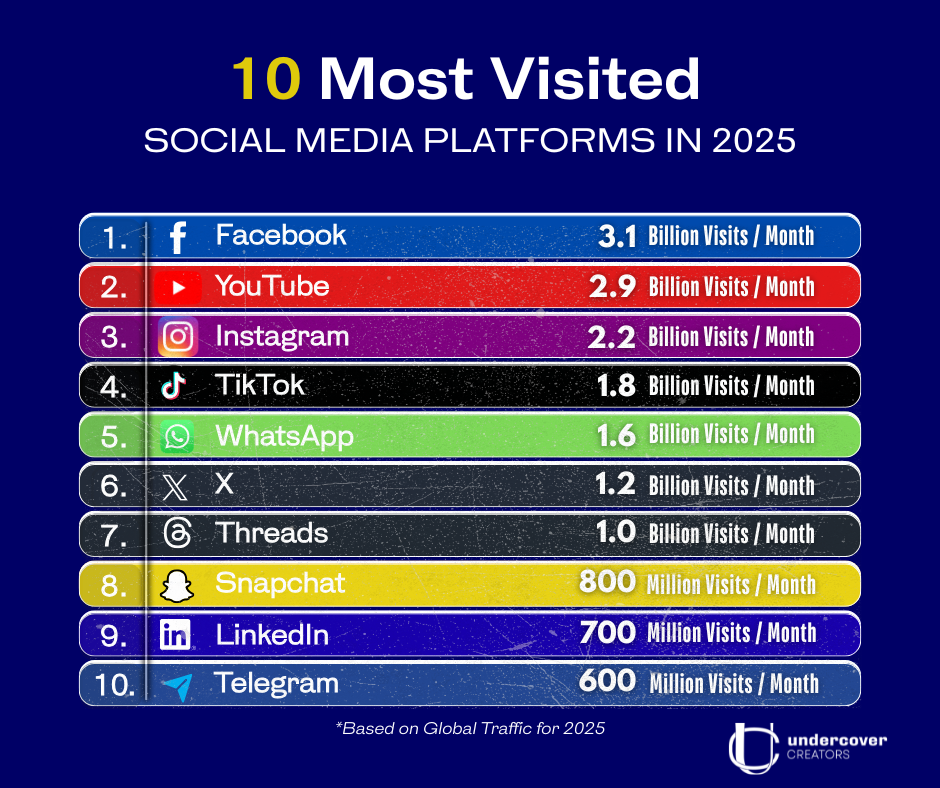
It also explains why this question matters so much in 2026. Over 5 billion people worldwide use social media daily, 96 percent of small businesses now use social media as part of their marketing, and the average person spends about 2 hours and 20 minutes per day on social platforms.
LinkedIn, Instagram, TikTok, YouTube, Facebook, and X explained for business owners
Let’s just do a quick run down of these 6 platforms.
You can say what you want about Facebook. I always hear “Nobody under 30 is on Facebook anymore.” But Facebook is still the largest social platform in the world, with over 3.07 billion monthly active users as of 2026.
For businesses, that means broad reach across many demographics. Facebook works well for sharing updates, visuals, and videos, running targeted ads, and building community through Pages and Groups. And don’t forget … Marketplace!
YouTube continues to be one of the strongest platforms for discovery and long-term engagement, with nearly 2.9 billion monthly active users globally. Businesses use YouTube for how-to videos, product demos, storytelling, and education. It also supports search visibility on both YouTube and Google.
Instagram reached 3 billion monthly active users globally in 2025 and is still really effective for visual storytelling. It supports product showcases, short videos, Stories, influencer collaboration, and in-app shopping.
TikTok is still seeing rapid growth, with more than 1.5 billion users worldwide. Short-form video dominates engagement, and creator-driven content performs quite well too.
LinkedIn is also growing a lot. It has over 1 billion members worldwide now (and still growing). It’s a very valuable platform for professional services, B2B businesses, consultants, coaches, and agencies.
X (formerly Twitter) is a real-time, short-form social media platform where people go for immediate news updates, public conversation, brand engagement, and networking. It’s most ideal for journalists, businesses, public figures, and industry professionals seeking to share insights, and monitor trends.
Platform recommendations by business type and audience
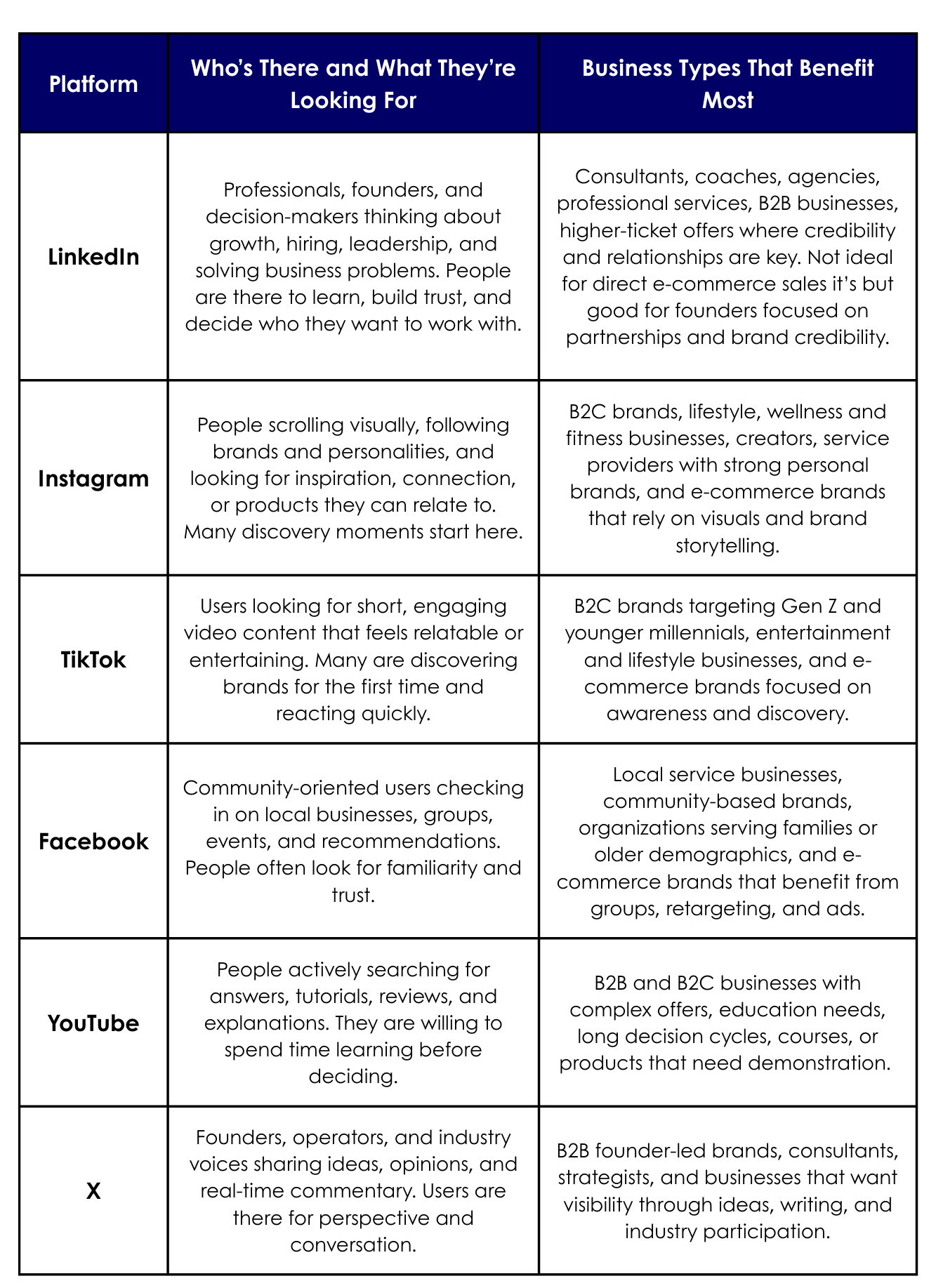
I’m a visual person, so I like charts because they make it easier to compare where effort actually pays off. Choosing the right platform directly affects the quality of opportunities you get (or don’t).
When your business is on a platform that matches how your audience thinks and makes decisions, conversations can happen faster and go deeper so your leads are more qualified. You can spend less time explaining what you do and more time talking about whether it’s a good fit.
If it’s not quite the best match, you’ll still get some visibility, but it often leads to wrong fit prospects or longer conversion cycles.
I put this chart together to guide alignment only. It’s not a hard and fast rule and will vary from different businesses, but it shows where you’re more likely to see a return on your time.
How long does a post stay visible on each platform and how often should I post?
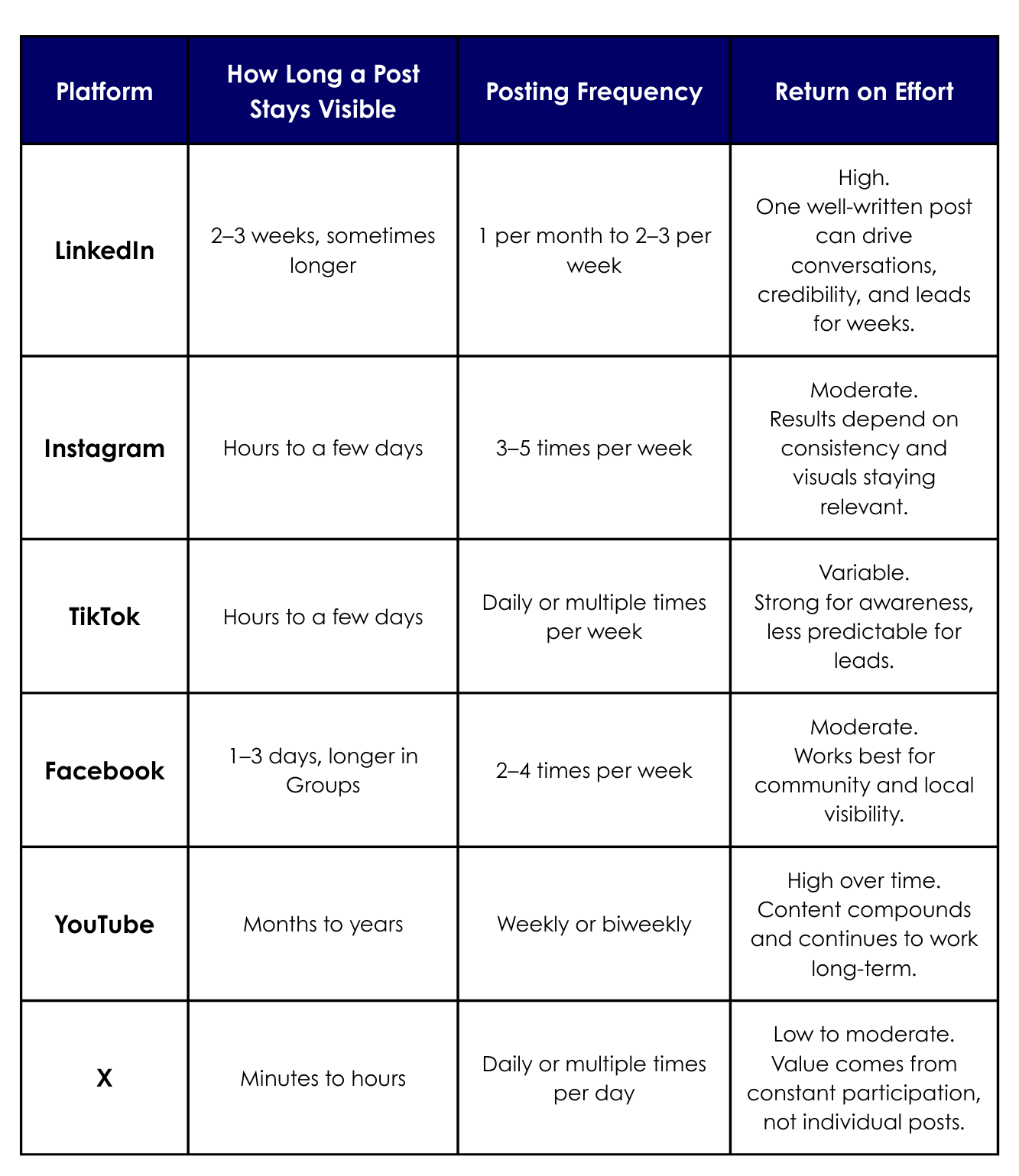
Social media content lifespans and posting expectations differ by platform.
On some platforms, your post has a very short window to do its job. On others, a single post can keep opening doors long after it’s been published.
LinkedIn is one of the few platforms where one strong post can do real work for you. You only need to post once a month to qualify as a LinkedIn Top Voice, which reinforces how much the platform prioritizes quality over frequency.
Content on YouTube can be visible for years. So, if you’re short on time or capacity, choosing a platform with a longer shelf life can completely change your return on effort (and sustainability).
The chart to the right breaks it all down. 👉
How monetization and lead generation differ by platform
Let’s clear something up first.
Organic social media works best when it supports brand awareness, trust, and credibility. When people are liking, commenting, saving, or following along, that’s a good sign your content is helpful, relatable, or useful to the right people.
But it does not automatically mean sales are happening.
If you’re looking for immediate sales, you usually need paid ads. Organic posts on their own rarely drive fast conversions because its job is warming people up.
Platforms built for direct monetization
Platforms like Instagram, TikTok, Facebook, and YouTube are more naturally set up for direct monetization.
They work well for when:
Someone can see something quickly
They understand it right away
Low risk and low price
Instagram and TikTok are especially effective for product-based businesses, lifestyle brands, creators, and ecommerce. People are scrolling, discovering, and making quicker decisions.
Facebook works well for community-driven offers, local businesses, events, and paid campaigns where targeting matters more than discovery.
YouTube sits somewhere in the middle. It can drive direct revenue through ads, memberships, or product links, but where it really shines is education and long-term visibility that leads to purchases over time.
Platforms built for lead generation and relationships
Platforms like LinkedIn and X work a little differently.
These are relationship-first platforms. People aren’t usually there to buy something on the spot. They’re there to think, learn, connect, and get a feel for who they trust.
LinkedIn is especially strong for B2B businesses, professional services, consultants, coaches, agencies, and higher-ticket offers. Decisions take longer and people are paying attention to how you communicate, how you show up in conversations, and whether you seem credible before they ever reach out.
X works well for founders, operators, and industry voices who want to be part of ongoing, real-time conversations. They share more about perspective and opinions. But over time, that visibility turns into recognition, and recognition turns into opportunities.
How to choose the right social media platform for your business
Here’s a checklist for you to consider. Once you answer these, you should have some clarity. If you’re still not sure, book a free consultation with an Undercover Creator and we’ll help you talk it through.
1. Get in the head of your ideal client
Are they in a professional mindset when they’re there, or a scrolling and discovering mindset
How do they prefer to consume content? Written posts, short videos, long-form video, visuals, or education?
When they hire someone like you, do they decide quickly or take time?
Are you primarily B2B, B2C, or a mix?
What age range are you realistically trying to reach?
2. Define your goals
Brand awareness and staying top of mind
Trust and credibility
Lead generation
Authority and positioning
3. Match your business type to how platforms actually work
If you sell professional services, consulting, coaching, or B2B work, LinkedIn tends to make the most sense because people are already thinking about growth, hiring, and solving problems.
If your business is visual, lifestyle-based, wellness-focused, or product-driven, Instagram or TikTok often work better for discovery and connection.
If you educate, teach, or explain complex ideas, YouTube supports deeper learning and long-term visibility.
If your business relies on community, local reach, or recommendations, Facebook still plays an important role.
If you’re a founder, operator, or industry voice, X can support visibility through ideas and conversation.
4. Reality check your capacity
How much time can you realistically give to this each week?
Are you doing this yourself or outsourcing?
Can you create quality content consistently without burning out?
Do you want quick discovery or longer-term relationship building?
5. If you’re already active, test and measure what’s already successful
Did this bring the right conversations?
Did I get inquiries that make sense for my business?
Are people understanding what I do faster?
Is this leading to opportunities, partnerships, or work?
6. Can you stay committed?
Choose one platform, maybe two at most.
Commit to it for at least 6 months.
Track things that matter: inquiries, conversations, leads, and revenue tied to that platform.
If you take nothing else from this, take this with you.
You don’t need to be everywhere. You just need to be intentional.
When you understand your audience, your goals, and how different platforms actually work, you can be more strategic and you’ll feel more confident.
Sometimes you’re too close to your own business to see it clearly so if you’ve gone through this checklist and still feel unsure, reach out. Book a free consultation with us we’ll help you figure out where your effort will actually pay off.

Undercover Creators is a Canadian marketing and content strategy agency that works with owner-led businesses to clarify their messaging, develop a clear brand voice, and build consistent, strategic content that supports business growth.
Our new client consultations are free, and they’re exactly that—conversations. You’ll leave knowing exactly what to do next, even if means working together isn’t the right time or fit. No pressure and no strings attached.
FAQ’S
Which social media platforms should I use for my business in 2026?
The right platforms depend on your audience, your business model, and your capacity. You don’t need to be on every platform. You need to be where your ideal clients already spend time and where the platform supports how they make decisions. For some businesses, that’s LinkedIn. For others, it’s Instagram, TikTok, YouTube, or Facebook.
Do I need to be on every social media platform to succeed?
No. In fact, being on too many platforms is one of the most common reasons businesses struggle with social media. Most businesses see better results by focusing on one platform, or two at most, and showing up consistently instead of spreading themselves too thin.
How do I know if a platform is right for my audience?
Look at how your audience behaves when they’re on that platform. Are they there to learn, connect, and think, or are they scrolling, discovering, and reacting quickly? Also consider whether your audience is B2B or B2C, how long they take to make decisions, and how they prefer to consume content.
What’s the difference between using social media personally and using it for business?
Personal use is based on entertainment, connection, or habit. Business use needs to support awareness, trust, and conversations that lead to work. Just because you enjoy a platform personally doesn’t mean it’s the best place to grow your business.
Is LinkedIn only for big companies and corporate jobs?
No. LinkedIn works very well for professional services, consultants, coaches, agencies, and B2B businesses of all sizes. It’s especially effective for higher-ticket services and longer decision cycles where trust and credibility matter.
Which platforms are better for ecommerce or product-based businesses?
Instagram and TikTok tend to work well for ecommerce and product-based businesses because they support visual discovery and faster decisions. Facebook can also be effective, especially with ads, groups, and Marketplace. YouTube works well when products need explanation or demonstration.
How long does social media content actually last on each platform?
It varies by platform. LinkedIn posts can stay visible for two to three weeks. YouTube content can work for months or even years. Instagram and TikTok posts often peak within hours or days. Facebook posts last longer in Groups than on Pages. X moves very quickly and rewards frequent participation.
How often should I post on social media?
Posting frequency depends on the platform and your capacity. LinkedIn values quality over volume. You can post once a month and still qualify as a LinkedIn Top Voice. Instagram and TikTok usually require more frequent posting. YouTube works best with consistent long-form content over time.
Should my goal on social media be sales?
Not usually. Organic social media works best for building awareness, trust, and credibility. Sales often require paid ads and clear offers. Social media’s role is often warming people up so conversations and opportunities happen more easily later.
Is it better to DIY social media or outsource it?
If you’re DIY-ing, sticking with platforms you already understand usually makes sense. When you outsource or invest strategically, the focus shifts to where your audience actually is and how they behave. Outsourcing often helps businesses see opportunities they were missing simply because they didn’t have the time or perspective.
How long should I commit to a platform before deciding if it works?
At least six months. Social media takes time, especially on platforms built around trust and relationships. Quitting too early often means you never had enough data to know what was actually working.
What’s the biggest mistake businesses make with social media?
Trying to do too much at once. Most businesses don’t struggle because they chose the wrong platform. They struggle because they tried to show up everywhere without enough time, strategy, or consistency.
Sources: