
Content Strategy vs. Content Calendar: Why Posting Consistently Still Isn’t Growing Your Business
For small business owners and in-house marketers who post regularly but still aren’t seeing results
TL;DR
If you’re posting regularly but not seeing more inquiries, engagement, or sales, the problem usually isn’t consistency. It’s strategy. A content calendar tells you when to post. A content strategy tells you why you’re posting, who you’re trying to reach, and what each piece is meant to do. You need both, and here’s how they fit together.
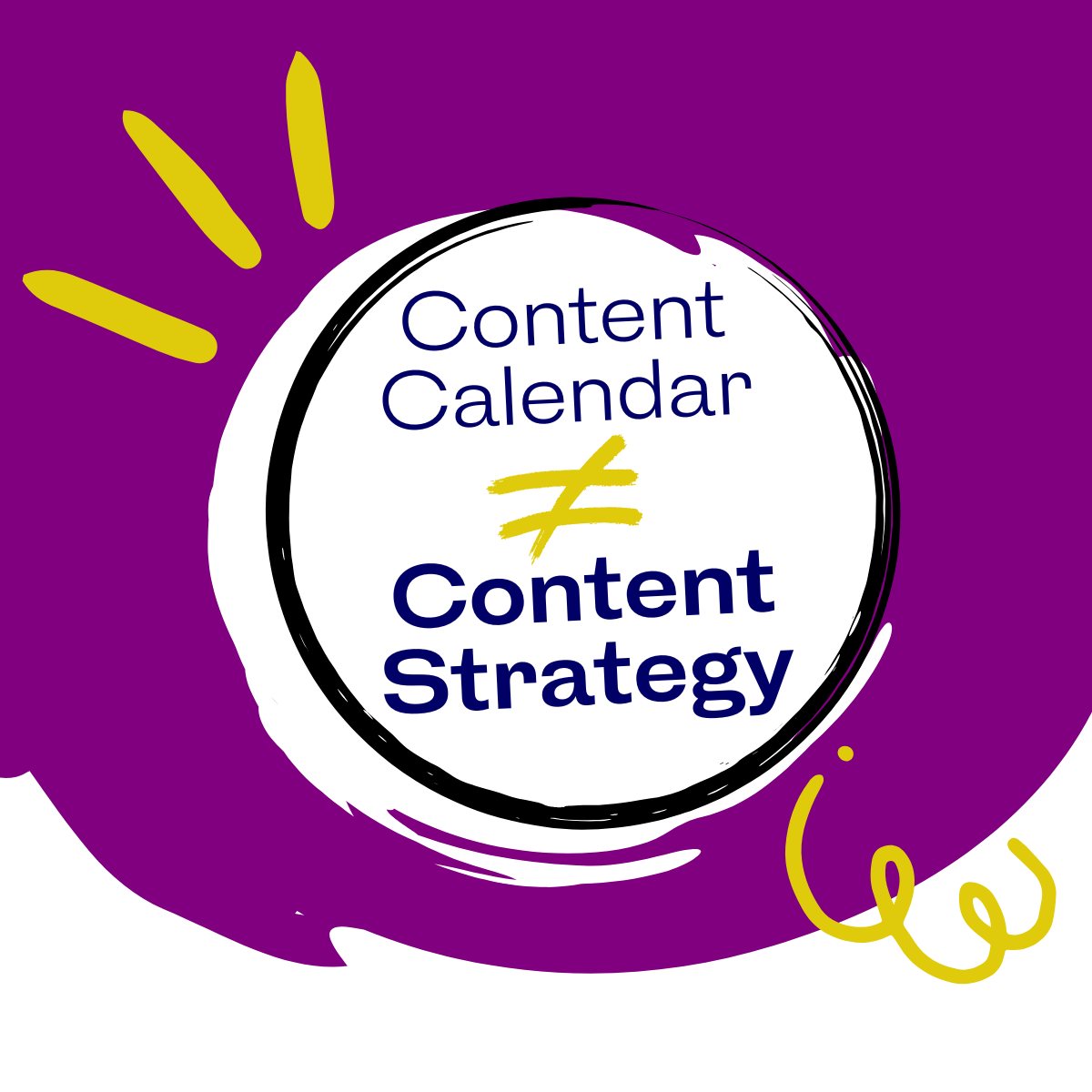
Posting consistently isn’t a strategy. It’s a habit. A good one, but a habit all the same.
You can fill a calendar for months and still have no real plan behind any of it. And when there’s no plan, even your best posts tend to drift past the people you actually want to reach.
Even a plan on paper isn’t a guarantee. Only 29% of marketers who had a documented content strategy said it was very or extremely effective, according to the Content Marketing Institute. So this isn’t about doing more. It’s about doing it with purpose.
This is one of the most common and most fixable problems we see. A content calendar and a content strategy are not the same thing, and once you understand the difference, your content gets easier to create and far better at its job. Let’s break it down.
What Is a Content Calendar?
A content calendar is a production tool. It’s visual, helps keeps your content organized, and guides blank. It answers the practical questions:
What are we posting?
Where is it going live?
When does it publish?
Who’s creating it?
What format is it in?
Without a calendar, content gets rushed, scattered, or forgotten, so yes, you want one. But staying organized isn’t the same as having direction. A calendar tells you what’s going out the door. It doesn’t tell you whether any of it is working.
What Is a Content Strategy?
A content strategy is the thinking behind the calendar. It answers the bigger questions:
Why does this piece exist?
Who is it for?
What problem does it solve?
Where is this person in their buying journey?
What do we want them to do next?
How does it support our business goals?
Every piece of content should have a reason to exist before you ever write it. That’s the difference between content that fills space and content that moves your business forward.
What Does a Calendar Without a Strategy Look Like?
We’ve all seen it, and most of us have done it. The calendar is full, but the posts don’t add up to anything:
“Happy Friday!”
A national-holiday graphic
A “meet the team” photo
A motivational quote
Another reel, because it’s been a few days
None of these are bad on their own. The problem is they’re disconnected. There’s no thread tying them to who you serve or what you want them to do. You’re busy, but you’re not building toward anything.
Strategy Gives Every Post a Job
When you have a strategy, every post shows up for a reason. Some posts build awareness. Some answer objections. Some show your expertise. Some build trust. Some bring in leads. Some encourage a booking or a sale. Some take care of the customers you already have.
Not one of them exists “because it’s Tuesday.” And because we write for every stage of the buyer’s journey, your content starts meeting people where they actually are, from the first time they hear about you to the moment they’re ready to buy.
The Three-Question Test to Give Every Post a Purpose
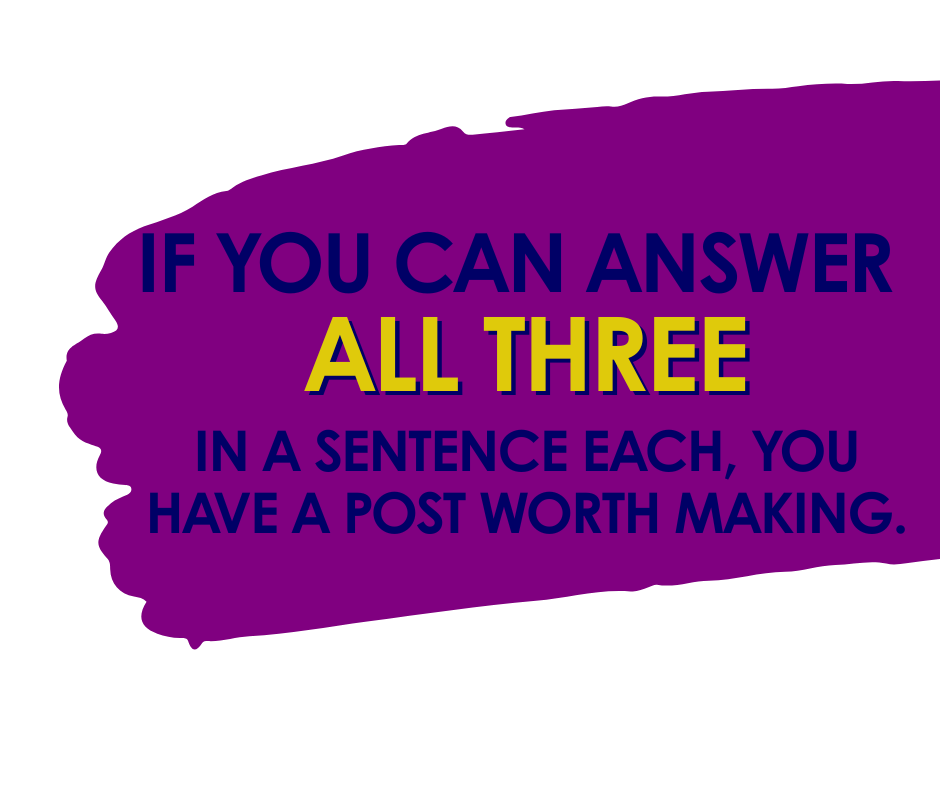
You don’t need a 30-page playbook to get started. Before you create anything, run it through three quick questions:
1. Audience: Who is this for, and what do they care about right now?
2. Question: What question is this piece answering, or what objection is it removing?
3. Action: What’s the one next step we want them to take?
If you can’t answer all three, you’ve just saved yourself the time you
would’ve spent on a post that wouldn’t have worked anyway.
How Do You Know If You Have a Calendar but Not a Strategy?
Here’s a quick gut check. If a few of these sound familiar, you’re likely working from a calendar without a strategy underneath it:
You run out of ideas every month.
Every post sounds a little different from the last.
Your engagement is all over the place.
You’re posting because “it’s time,” not because you have something to say.
You can’t explain why a specific post exists.
Your content keeps attracting the wrong audience.
You rarely get inquiries from any of it.
Your team debates what to post every single week.
Audit Your Existing Content With These Questions
Want to pressure-test what you’ve already published? Pull up your last ten posts and ask:
1. Who was this for?
2. What problem did it address?
3. Why would someone stop scrolling for it?
4. What did we want them to learn?
5. What action did it point them toward?
6. Where did it fit in the customer journey?
7. How did we measure whether it worked?
If most of your posts come up blank on these, this will become your roadmap for what to fix.
Doesn’t Strategy Just Add More Work?
It’s a valid concern, but it’s backwards. Strategy actually removes work, because it removes guesswork. Once you know who you’re talking to, what they care about, the questions they ask, the services that connect, and the next step you want them to take, the blank page stops being so blank. You’re not reinventing your content every week. You’re executing a plan. That’s faster, calmer, and far more effective.
Before You Create Your Next Post
So here’s the simple test to carry with you. Before anything goes on the calendar, ask:
Why does this post exist?
Who is it for?
What’s it supposed to accomplish?
If you can’t answer those in a sentence or two, spend a little more time on the strategy before you worry about the graphic or the caption. A calendar keeps your content moving. A strategy makes sure it’s moving in the right direction.
Frequently Asked Questions
What’s the difference between a content strategy and a content calendar?
A content strategy is the plan behind your content: who it’s for, why it exists, and what you want it to do. A content calendar is the schedule that organizes when and where each piece goes live. You need both, but the strategy comes first.
Can I have a content calendar without a strategy?
You can, and a lot of businesses do. The result is usually consistent posting that doesn’t lead anywhere. The calendar keeps you organized, but without a strategy, there’s nothing guiding what you post or why.
Do small businesses really need a content strategy?
Yes, and arguably more than anyone. When time and budget are tight, a strategy makes sure every post earns its place instead of adding to the clutter.
Which comes first, the strategy or the calendar?
The strategy. Once you know who you’re reaching and what you want each piece to do, filling the calendar becomes quick and a lot less stressful.
How do I start building a content strategy?
Start small. Define your main audience, list the questions they ask before they buy, and decide what action you want each piece of content to drive. From there, the calendar mostly fills itself.
Ready to Give Your Content a Plan?

At Undercover Creators, we don’t start by asking what you should post next week.
We start with your business, your audience, your message, and your goals. Once the strategy is clear, consistent content gets easier to create and a lot better at its job.
If you’ve got a full calendar but still feel like you’re guessing, let’s take a look together. Grab our free Content Purpose checklist, or book a free 20-minute discovery call. No pressure, no pitch, and you’ll know what to do next.
Written by Lindsay Fuchs, Brand Strategist and Content Director at Undercover Creators. Lindsay works directly with owner-led businesses to develop messaging, brand voice, and content strategies that turn scattered marketing into purposeful content designed to build trust, attract the right audience, and support business growth.